AI-Powered Productivity
Literature surveillance that turns screening into reports.
Continuously monitor literature, document screening decisions, and generate post-market reports without manual assembly.
One feature. Multiple built-in superpowers.
Intelligent Meeting Sync
Intelligent Meeting Sync
Intelligent Meeting Sync
Find relevant literature faster
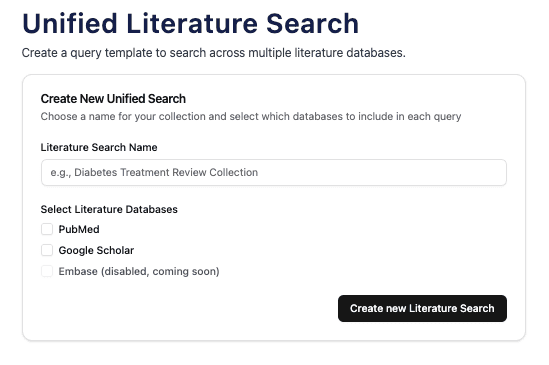
Search across the sources teams already use, with continuous monitoring built in. New publications are captured automatically, duplicates are removed before review begins, and searches stay organized across reporting cycles so teams are not rebuilding queries or spreadsheets each time.
Unified search
Query PubMed, Google Scholar, and other sources together
Unified search
Query PubMed, Google Scholar, and other sources together
Unified search
Query PubMed, Google Scholar, and other sources together
Duplicate detection
Automatically identify and remove overlapping results across databases
Duplicate detection
Automatically identify and remove overlapping results across databases
Duplicate detection
Automatically identify and remove overlapping results across databases
Continuous Search
Save and rerun searches that run in the background without rebuilding queries
Continuous Search
Save and rerun searches that run in the background without rebuilding queries
Continuous Search
Save and rerun searches that run in the background without rebuilding queries
Import external results
Upload CSV/XLSX results from other tools and screen them here.
Import external results
Upload CSV/XLSX results from other tools and screen them here.
Import external results
Upload CSV/XLSX results from other tools and screen them here.
Live Listening Engine
Live Listening Engine
Live Listening Engine
Screen literature with documented decisions
Define what “relevant” means once, then apply it consistently. The platform screens titles and abstracts against inclusion and exclusion criteria and produces a selection log that is ready for review.
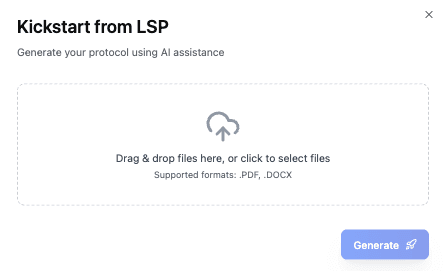
Kickstart from LSP
Upload a PDF/DOCX to generate starter criteria
Kickstart from LSP
Upload a PDF/DOCX to generate starter criteria
Kickstart from LSP
Upload a PDF/DOCX to generate starter criteria
AI-assisted screening
Apply protocol criteria across abstracts with decision rationale
AI-assisted screening
Apply protocol criteria across abstracts with decision rationale
AI-assisted screening
Apply protocol criteria across abstracts with decision rationale
Editable decisions
Change selections, add context, and rerun screening as needed
Editable decisions
Change selections, add context, and rerun screening as needed
Editable decisions
Change selections, add context, and rerun screening as needed
Exportable audit log
Maintain a clear record of literature selection decisions
Exportable audit log
Maintain a clear record of literature selection decisions
Exportable audit log
Maintain a clear record of literature selection decisions
Automatic Report Generation
Automatic Report Generation
Automatic Report Generation
Generate reports automatically
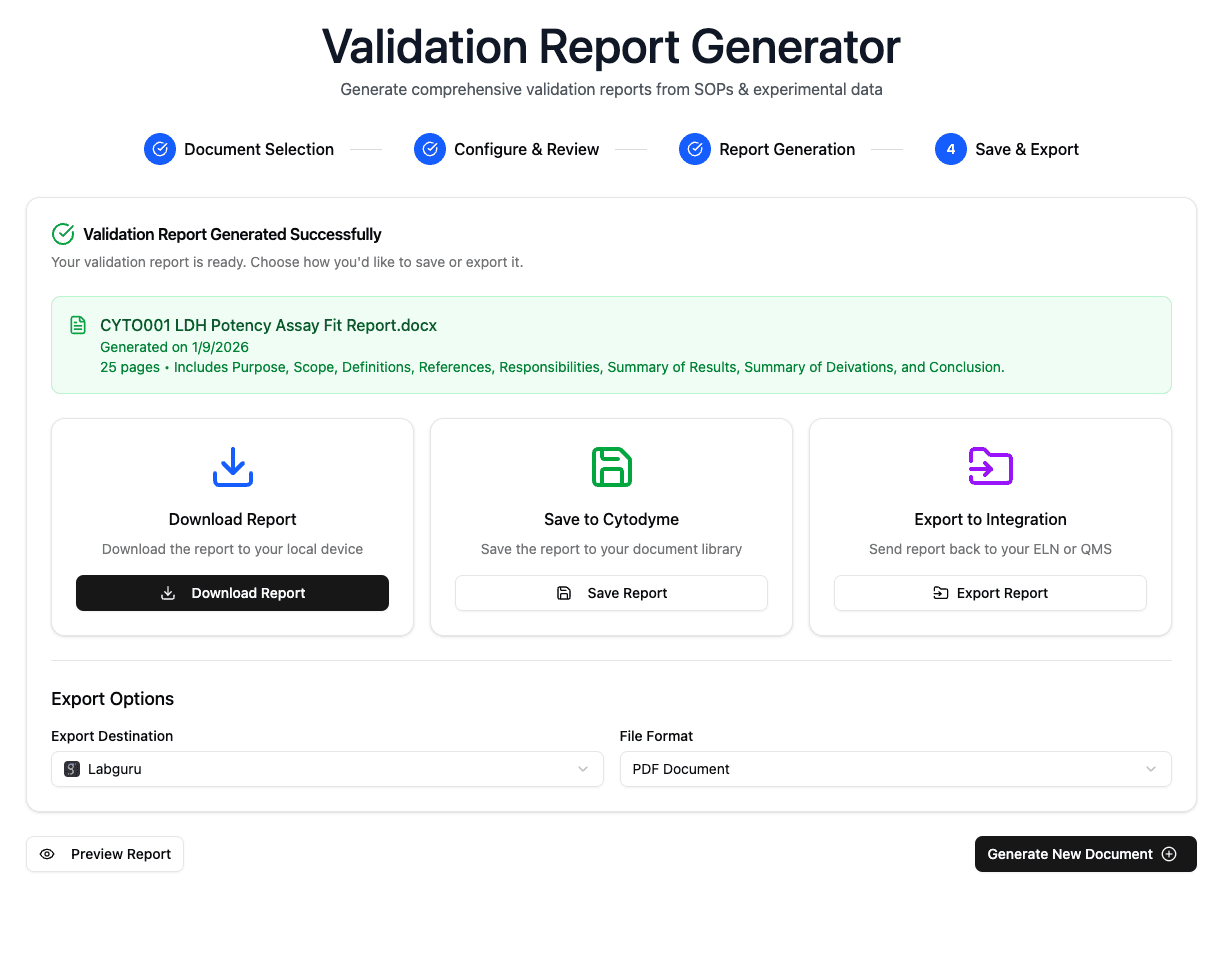
Turn screened evidence into post-market reports without manual assembly. Citations, rationale, and traceability are preserved so teams can review, finalize, and prepare submissions without rebuilding content by hand.
PSER and PMPFR Support
Generate literature sections for recurring post-market reports such as PSERs and PMPFRs using screened references and documented decisions.
PSER and PMPFR Support
Generate literature sections for recurring post-market reports such as PSERs and PMPFRs using screened references and documented decisions.
PSER and PMPFR Support
Generate literature sections for recurring post-market reports such as PSERs and PMPFRs using screened references and documented decisions.
Preserved citations
Maintain direct traceability from report content back to source publications and screening rationale.
Preserved citations
Maintain direct traceability from report content back to source publications and screening rationale.
Preserved citations
Maintain direct traceability from report content back to source publications and screening rationale.
Consistent outputs
Produce reports with consistent structure and formatting across reporting cycles.
Consistent outputs
Produce reports with consistent structure and formatting across reporting cycles.
Consistent outputs
Produce reports with consistent structure and formatting across reporting cycles.
Stress-free Review
Easy to review, revise, and approve as part of existing internal workflows.
Stress-free Review
Easy to review, revise, and approve as part of existing internal workflows.
Stress-free Review
Easy to review, revise, and approve as part of existing internal workflows.
Still Have Questions?
Still Have Questions?
Still Have Questions?
Still have questions? We’ve got you covered.
If it’s not covered here, reach out — or just try Hexa free and see for yourself.
What databases can Cytodyme search?
Literature searches can pull from the sources teams already use today, including PubMed, Embase, and Google Scholar, through a unified search interface.
Do we need to change our existing literature search process?
No. The platform is designed to sit on top of your current process, not replace it. Existing literature search protocols (LSPs) can be used as a starting point and refined within the platform.
How does the platform decide which papers are relevant?
Relevance is determined using a defined literature review protocol, including explicit inclusion and exclusion criteria. AI applies the protocol consistently, while users can review, edit, and override decisions at any time.
Can we see why a paper was included or excluded?
Yes. Each inclusion or exclusion is accompanied by a clear rationale, so teams can trace decisions back to the protocol criteria during review or audit.
What role does AI play in the review?
AI assists with screening and consistency, helping teams reduce manual abstract review and rework. Final decisions remain with the team, and all actions are logged for traceability.
How is traceability handled?
All searches, protocol versions, screening decisions, and edits are logged and time-stamped, making it easier to defend decisions during internal review or inspection.
What databases can Cytodyme search?
Literature searches can pull from the sources teams already use today, including PubMed, Embase, and Google Scholar, through a unified search interface.
Do we need to change our existing literature search process?
No. The platform is designed to sit on top of your current process, not replace it. Existing literature search protocols (LSPs) can be used as a starting point and refined within the platform.
How does the platform decide which papers are relevant?
Relevance is determined using a defined literature review protocol, including explicit inclusion and exclusion criteria. AI applies the protocol consistently, while users can review, edit, and override decisions at any time.
Can we see why a paper was included or excluded?
Yes. Each inclusion or exclusion is accompanied by a clear rationale, so teams can trace decisions back to the protocol criteria during review or audit.
What role does AI play in the review?
AI assists with screening and consistency, helping teams reduce manual abstract review and rework. Final decisions remain with the team, and all actions are logged for traceability.
How is traceability handled?
All searches, protocol versions, screening decisions, and edits are logged and time-stamped, making it easier to defend decisions during internal review or inspection.
What databases can Cytodyme search?
Literature searches can pull from the sources teams already use today, including PubMed, Embase, and Google Scholar, through a unified search interface.
Do we need to change our existing literature search process?
No. The platform is designed to sit on top of your current process, not replace it. Existing literature search protocols (LSPs) can be used as a starting point and refined within the platform.
How does the platform decide which papers are relevant?
Relevance is determined using a defined literature review protocol, including explicit inclusion and exclusion criteria. AI applies the protocol consistently, while users can review, edit, and override decisions at any time.
Can we see why a paper was included or excluded?
Yes. Each inclusion or exclusion is accompanied by a clear rationale, so teams can trace decisions back to the protocol criteria during review or audit.
What role does AI play in the review?
AI assists with screening and consistency, helping teams reduce manual abstract review and rework. Final decisions remain with the team, and all actions are logged for traceability.
How is traceability handled?
All searches, protocol versions, screening decisions, and edits are logged and time-stamped, making it easier to defend decisions during internal review or inspection.